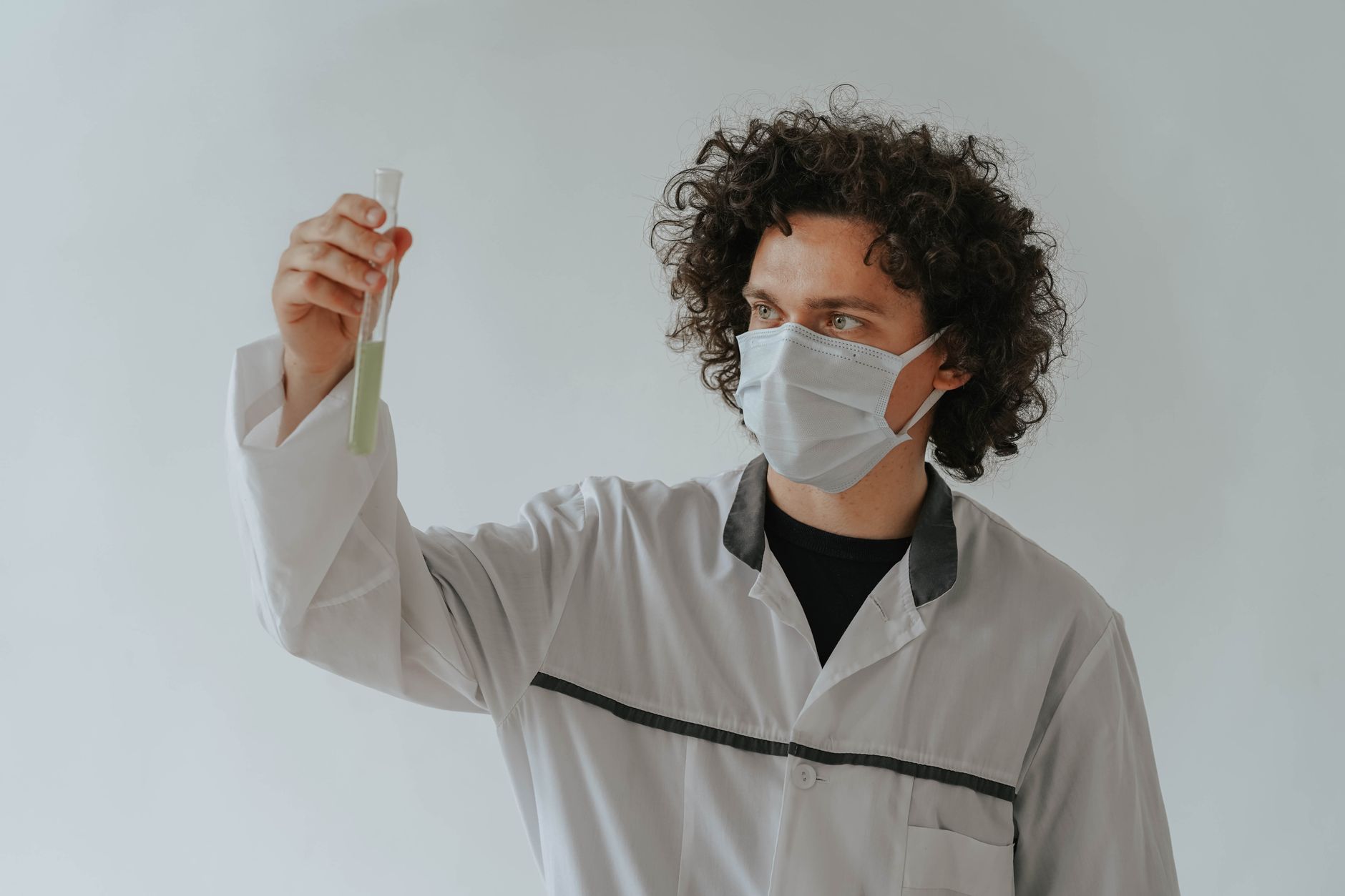
Food science is being used in skincare formulation. Fermentation technology, lipid encapsulation, and plant-based bioactive extraction replicate nutrient-dense foods. This happens at a molecular level. Brands like Superegg apply these techniques to translate the skin benefits of egg-derived nutrients into fully vegan, high-performance formulas using proprietary delivery systems like Duplex® technology.
What Is Food Science in Skincare Formulation, and Why Does It Matter?
Food science studies bioactive compounds. How do they behave and degrade? How do they interact in complex biological matrices? That knowledge maps directly onto skin barrier function, because the skin is itself a biological matrix that processes, absorbs, and responds to lipids, amino acids, and peptides in ways that closely mirror digestive and cellular uptake mechanisms. Nutrients found in eggs, fermented grains, and cold-pressed oils contain lipid profiles and peptide sequences that the skin readily recognizes. The global cosmetic active ingredients market is valued at USD 4.7 billion in 2026 and is projected to reach USD 8.7 billion by 2035 at a CAGR of 7.2% (gminsights.com), a trajectory driven in significant part by the crossover between food-science methodology and cosmetic chemistry. Food-science techniques are being licensed by cosmetic formulators. Emulsification, encapsulation, and fermentation improve ingredient stability and penetration. This shortens innovation cycles. Formulators draw on the food supply chain rather than synthetic chemistry labs. Consumer ingredient literacy, shaped by decades of food labeling transparency, is now demanding the same clarity on skincare labels. People who scrutinize a yogurt's probiotic strain or an olive oil's polyphenol content are applying that same standard to their moisturizer.
How Do Food-Grade Bioactives Differ from Conventional Cosmetic Ingredients?
Food-grade bioactives carry a pre-validated safety profile because they are subject to stricter purity and consumption-level safety testing before they ever reach a cosmetic formulator. That is a meaningful head start. Many food-derived actives are inherently water- or fat-soluble in a way that aligns with the skin's own bilayer structure, improving transdermal compatibility from the outset. Conventional synthetic ingredients prioritize shelf stability first. Skin compatibility comes second. Food-derived actives, by contrast, are optimized for biological interaction because their original purpose was to be metabolized inside a living system. That biological design intent is precisely why food science is proving to be such a productive source of innovation for skincare formulators.
Which Food Science Techniques Are Most Commonly Used in Modern Skincare?
Several food-processing methods have crossed over into cosmetic chemistry, each addressing a specific challenge in ingredient delivery or stability. The global fermented ingredient market was valued at USD 55.60 billion in 2025 (futuremarketinsights.com), reflecting broad industrial adoption across food, pharmaceutical, and personal care applications. The cosmetic nanoencapsulation market, which includes lipid vesicle systems, stood at USD 2,054.3 million in 2025 and is projected to reach USD 6,203.3 million by 2035 (futuremarketinsights.com). These numbers confirm that both fermentation and encapsulation have moved well beyond experimental status. Cold-press and supercritical CO2 extraction preserve heat-sensitive compounds. Polyphenols and fatty acids survive intact. Solvent extraction destroys them. Enzyme bioconversion, borrowed from food protein processing, converts plant proteins into bioactive peptides with defined skin-signaling functions. Emulsion science drawn from food manufacturing informs the texture, skin feel, and release kinetics of every cream and serum on the shelf.
Why Is Fermentation Considered a Breakthrough Method for Skincare Actives?
Fermentation reduces the molecular weight of plant compounds, and that single change has significant consequences for skin penetration. The stratum corneum, the outermost layer of skin, functions as a selective barrier. Smaller molecules pass through it more readily than large, intact plant proteins or polysaccharides. Beneficial microorganisms break down botanicals and grains. They produce smaller fragments. These fragments cross skin barriers. Whole-molecule extracts cannot. The fermented ingredient market shows amino acids holding a 36.0% share in 2026 as the leading product segment (futuremarketinsights.com), reflecting just how central fermentation-derived amino compounds have become to ingredient innovation. Beyond size reduction, fermentation generates postbiotics and organic acids as byproducts. These compounds have independent skin-conditioning effects, including pH modulation and microbiome support, that the original unfermented plant material does not provide. The evidence base for fermented actives spans in-vitro assays and controlled clinical studies measuring transepidermal water loss (TEWL) and hydration. That said, the honest formulator's position is that human clinical data remains thinner than mechanistic data: the biological plausibility is strong, but dermatology literature documenting TEWL improvement in randomized trials is still accumulating. Formulators who cite only mechanism without clinical follow-through are doing readers a disservice.
How Does Lipid Encapsulation Improve Ingredient Delivery in Skincare?
Lipid bilayer vesicles mimic skin cell membranes. They contain phospholipids. Encapsulated actives fuse with skin more efficiently. Free-form ingredients cannot match this. This is not a cosmetic marketing concept. It draws on over three decades of pharmaceutical liposome research, where phospholipid vesicles are used to deliver drugs across biological membranes with precision. Encapsulation also extends the shelf life of oxidation-prone actives like vitamin C and polyunsaturated fatty acids without requiring heavy synthetic preservative loads. That is the "cleaner delivery system" that ingredient-literate consumers are beginning to ask for: not just what is in the formula, but how it is protected and delivered. At Superegg, we apply this principle specifically through our Duplex® technology, a plant-based analog of egg-yolk phospholipids that delivers nutrients in a bilayer format the skin biologically recognizes. The system is designed so the delivery vehicle itself is skin-compatible, not merely inert.
How Are Plant-Based Brands Replacing Animal-Derived Ingredients Using Food Science?
This is where food science provides the most rigorous path forward for vegan skincare, and it is an area that generic "clean beauty" discourse consistently underexplains. Eggs have long been valued in skincare for lecithin, albumin, biotin, and their fatty acid profile. The food science approach avoids superficial swaps. It begins by identifying the precise molecular function of each egg component and then locates plant sources that perform that function at the same structural level. Sunflower lecithin and rapeseed phospholipids replicate egg-yolk profiles. No animal involvement required. Food industry research documents their emulsion stability. These ingredients have been used in food manufacturing for decades. For example, consider a vegan beauty enthusiast in Brooklyn who previously relied on an egg-based night cream for its rich lecithin content and nourishing feel. She switched to sunflower phospholipid formulations. Food-science extraction methods made this possible. She achieved the same barrier repair and skin conditioning. Her cruelty-free values remained intact. She knew exactly which plant delivered each nutrient. The bio-based cosmetics and personal care ingredients market reached a 34% market share in Europe as of 2025 (custommarketinsights.com), a region where regulatory and consumer pressure has accelerated plant-based substitution most aggressively. Pea protein hydrolysates replicate egg white properties. Quinoa amino acid complexes do the same. Both provide film-forming and barrier-repair functions. Biotin sourced from nutritional yeast and almonds is chemically identical to egg-derived biotin, making it a true molecular match.
What Skin Benefits Does Egg Chemistry Traditionally Provide, and Can Plants Replicate Them?
Egg yolk lecithin is a primary emollient and skin-barrier lipid. Sunflower-derived phosphatidylcholine provides a structurally identical fatty acid profile and has been validated in pharmaceutical-grade liposome research, not just cosmetic trade literature. Egg white proteins contribute tightening, film-forming, and humectant effects. Hydrolyzed plant proteins from rice and soy achieve equivalent skin surface conditioning when enzymatically sized to match the target molecular weight range. The key word is enzymatically sized. This is where food science enzyme bioconversion technology becomes essential: it gives formulators control over peptide chain length that simple extraction cannot achieve. Superegg's Duplex® technology represents a direct application of this discipline, translating the complete nutrient matrix of an egg into a plant-based formulation that delivers equivalent skin nourishment. This is our product, and we say so plainly. Functional equivalence at the molecular level is a different claim than "we replaced egg with plants." The former requires food science methodology; the latter is just an ingredient list change.
What Does the Evidence Say About Food-Science-Derived Skincare Efficacy?
The honest answer is that the evidence is layered and uneven, and consumers deserve to understand the distinction. Phospholipid vesicle delivery has three decades of peer-reviewed research. Bioavailability exceeds conventional topical delivery. That evidence is strong, mechanistically clear, and cross-validated across drug delivery and cosmetic applications. Fermented ingredients have solid in-vitro evidence for barrier support and hydration improvement, including measurable TEWL reduction in controlled chamber studies. Evidence gaps appear in large-sample trials. Randomized, placebo-controlled studies specific to cosmetics remain limited. One candid position in dermatology literature is that topical efficacy evidence for fermented bioactives, while promising, remains preliminary when held to pharmaceutical-grade clinical standards. That gap is real, and formulators who paper over it with mechanism-only citations are not serving the evidence-based consumer. What food science does provide, beyond the ingredients themselves, is an existing research infrastructure. Stability testing uses food-industry protocols. Active integrity survives from production through shelf life. This addresses a common natural formulation failure. Skin care accounted for 43% of bio-based ingredient applications by revenue in 2025 (custommarketinsights.com), signaling that the industry is directing its highest-value bio-based research into the skincare category.
How Do Formulators Validate That Food-Science-Derived Actives Actually Work on Skin?
Validation follows a three-stage process that mirrors pharmaceutical development more than traditional cosmetic testing. In-vitro assays measure cellular response. Keratinocyte and fibroblast cultures test bioactives. This happens before human testing. Mechanistic evidence emerges first. Controlled clinical studies then use non-invasive instruments, corneometers for capacitance-based hydration measurement and TEWL meters for barrier integrity, to quantify improvement against placebo baselines. Stability testing under food-industry protocols ensures that active integrity is maintained from production through end of shelf life. pH compatibility is tested with stability. Food-science actives come from acidic or neutral matrices. Skin is acidic, typically pH 4.5 to 5.5. pH adjustment keeps actives effective. Matching ingredient pH to skin matters greatly. An active that is unstable at skin pH fails. In-vitro performance cannot save it. This is the ingredient-environment compatibility dimension that most vendor blog coverage omits entirely.
What to Look for When Shopping Food-Science-Inspired Skincare
The global cosmetic ingredients market is valued at $35.36 billion in 2026 (thebusinessresearchcompany.com), and a growing share of that market is marketed under food-science-adjacent language. Not all of it is rigorous. Scrutiny is necessary. Green beauty is predicted to grow 15% per year from 2024 to 2030, outpacing the broader industry (formulabotanica.com), which means the marketing pressure to claim food-science credentials will only intensify. Probiotic cosmetics alone were valued at USD 393.7 million in 2025 (futuremarketinsights.com), a category with enormous range in product quality. Here is how to read through the noise. Prioritize brands that name specific technologies rather than broad ingredient categories. Fermented extract tells you very little. Lactobacillus-fermented Saccharomyces cerevisiae filtrate names the organism. It specifies the substrate. The resulting compound is identified. Look for encapsulation or delivery system language. Terms like liposome or phospholipid vesicle signal investment in bioavailability. Named proprietary systems do too. This exceeds simple ingredient sourcing. Seek third-party editorial validation from credible beauty media or dermatologist commentary rather than brand-generated claims alone. Verify vegan status explicitly if it matters to you: food-science-derived plant alternatives should be confirmed ingredient by ingredient, not implied by brand positioning.
Why Does Proprietary Delivery Technology Matter More Than Raw Ingredient Lists?
undefined A high-quality bioactive in a poor delivery system underperforms consistently. This is why asking "how does this ingredient reach my skin cells?" is more predictive of results than asking "how much of this ingredient is in the formula?" Proprietary technologies like Superegg's Duplex® system encode not just what goes into a formula but how the formula interacts with skin at a biological level. That is our product and our differentiator, and we identify it as such. When evaluating any brand, request INCI names, ingredient sourcing notes, and delivery system documentation. Brands serious about food-science formulation provide these without hesitation. Brands that deflect to marketing language about "nature-inspired" or "farm-to-face" sourcing without technical backing are signaling that their food-science framing is aesthetic rather than scientific. The distinction matters.
Published: September 10, 2026 | Last Updated: September 10, 2026
Frequently Asked Questions
Is food science in skincare just a marketing trend or backed by real science?
What is the difference between a food-grade ingredient and a cosmetic-grade ingredient?
How does Superegg use food science to replace egg-derived ingredients with plant-based alternatives?
Are fermented skincare products suitable for sensitive skin types?
Can plant-based phospholipids really match the emollient performance of egg yolk lecithin?
What does Duplex® technology do that standard moisturizer formulas do not?
How do I know if a clean beauty brand using food science is actually effective versus just marketing?
Do food-science-derived skincare actives have a shorter shelf life than synthetic alternatives?
How does fermentation change skincare ingredients at the molecular level?
What benefits do probiotics and postbiotics add to formulations?
Is fermented rice water actually effective for skin brightening?
How do prebiotics support the skin microbiome in skincare?
What are fermented ceramides and how do they work?
Sources & References
- Cosmetics Active Ingredients Market Size, Share Report, 2035[industry]
- Top 7 Cosmetic Ingredients Predictions for 2026[industry]
- Cosmetic Nanoencapsulation Market Report[industry]
- Cosmetic Ingredients Market Size Forecast Analysis Report 2026-2030[industry]
- Bio-Based Cosmetics and Personal Care Ingredients Market[industry]
About the Author
Superegg
Superegg pioneers plant-based skincare innovation with proprietary Duplex® technology that replicates egg's nutrient power, delivering performance-driven results for clean beauty enthusiasts without ethical compromise.
Learn more at www.superegg.nyc →Related Posts

Superegg, Explained: An Honest Guide from the Brand
Superegg is a New York-based vegan skincare brand that replicates the egg's nutrient profile with plant-derived ingredients. How Duplex® technology works, what each product is, what to expect, and where to buy — with full INCI lists to verify.
How to Transition to Clean Beauty Without Sacrificing Results
Switching to clean beauty doesn't mean giving up on performance. This guide walks you through a practical, phase-by-phase approach to building a results-driven clean skincare routine, from auditing your current products to choosing plant-based formulas that actually deliver.

Plant-Based Collagen Alternatives in Skincare: What Works and Why
Plant-based skincare has evolved far beyond simple swaps. Today, ingredients like bakuchiol, peptides, and rice bran protein can replicate many of the skin-firming, moisture-binding benefits traditionally tied to collagen and animal proteins. Here is what the science actually says.